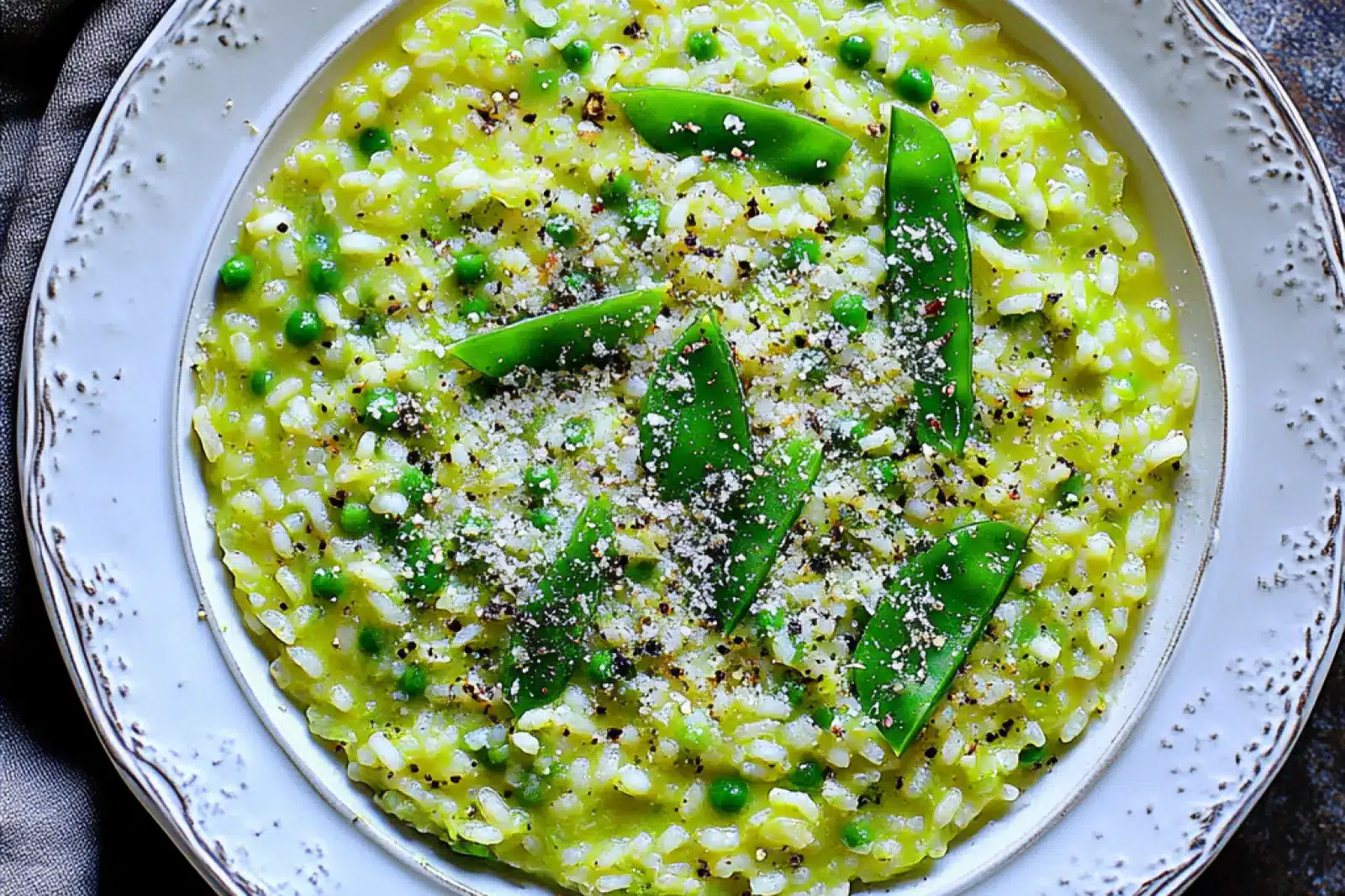
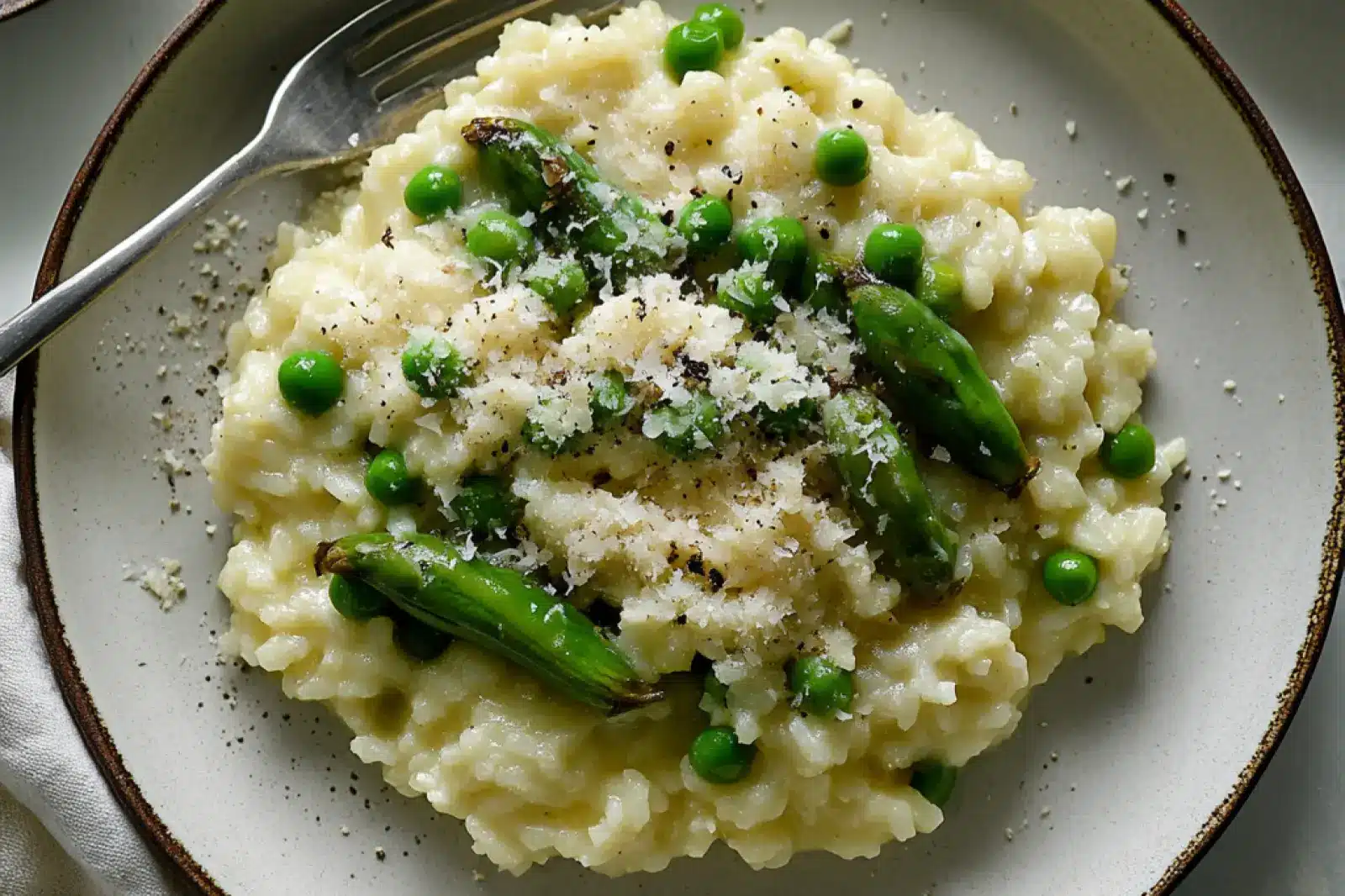
There’s something about stirring a pot of creamy rice while spring vegetables soften into little pockets of sweetness that just feels right. Risotto with Asparagus and Peas is the kind of dinner that looks fancy but comes together with one pot, a little patience, and vegetables that taste like the season finally turned a corner.
I started making this back in 2019 when I needed something that felt like a real meal but didn’t drain me after a long day it became my reset dish when I’m tired but still craving something warm and a little lighter than what I’d been eating all winter. The key is adding the asparagus in stages so you get both tender bites and bright green pieces that still have snap. After ten years of testing spring dinners, I’ve learned that good risotto doesn’t need to be fussy; it just needs a rhythm you can relax into.
PrintRisotto with Asparagus and Peas Easy Spring Dinner
This Risotto with Asparagus and Peas makes a perfect easy dinner for busy weeknights. The creamy risotto pairs beautifully with fresh spring vegetables, creating a family-friendly meal that everyone will enjoy. Enjoy a comforting vegetable risotto that’s full of flavor.
- Prep Time: 15 minutes
- Cook Time: 30 minutes
- Total Time: 45 minutes
- Yield: Serves 4 as a main dish or 8 as a starter or side 1x
- Category: Main Course
- Method: Stovetop
- Cuisine: Italian
- Diet: Standard
Ingredients
- 6 cups low-sodium chicken broth
- 4 tablespoons unsalted butter divided
- 1 bunch asparagus preferably thin trimmed and cut into 1 inch pieces
- ¼ teaspoon salt
- Freshly ground black pepper
- 1 cup frozen peas
- 1 medium yellow onion finely chopped
- 2 cloves garlic minced
- 1½ cups Arborio rice
- ½ cup dry white wine
- ½ cup grated Parmigiano-Reggiano plus more for serving
Instructions
- Warm the chicken broth in a medium pot until it begins to simmer.
- In a large pot over medium-low heat, melt 1 tablespoon of butter and sauté the asparagus with salt and pepper until crisp-tender, about 2 to 4 minutes. Add the peas and cook just until thawed, around 1 minute, then remove the vegetables and set them aside.
- Add 2 tablespoons of butter to the same pot and cook the onions over medium-low heat until they turn translucent, about 2 to 3 minutes. Stir in the garlic and cook for another minute, avoiding browning.
- Mix in the Arborio rice and keep stirring for about 2 minutes until the rice edges look glossy and translucent. Pour in the white wine and cook until fully absorbed, roughly 1 minute.
- Add the warm broth one cup at a time, stirring often and waiting for each addition to absorb before adding the next, until the rice is creamy and al dente, about 25 minutes.
- Fold the reserved asparagus and peas, the Parmigiano-Reggiano, and the last tablespoon of butter into the risotto. Adjust seasoning with salt and pepper if needed. If the risotto is too thick, stir in a little milk to loosen it. Serve immediately with extra Parmigiano-Reggiano on the side.
Nutrition
- Serving Size: 1 bowl
- Calories: 277
- Sugar: 2 g
- Sodium: 245 mg
- Fat: 9 g
- Saturated Fat: 5 g
- Carbohydrates: 37 g
- Fiber: 3 g
- Protein: 10 g
- Cholesterol: 20 mg
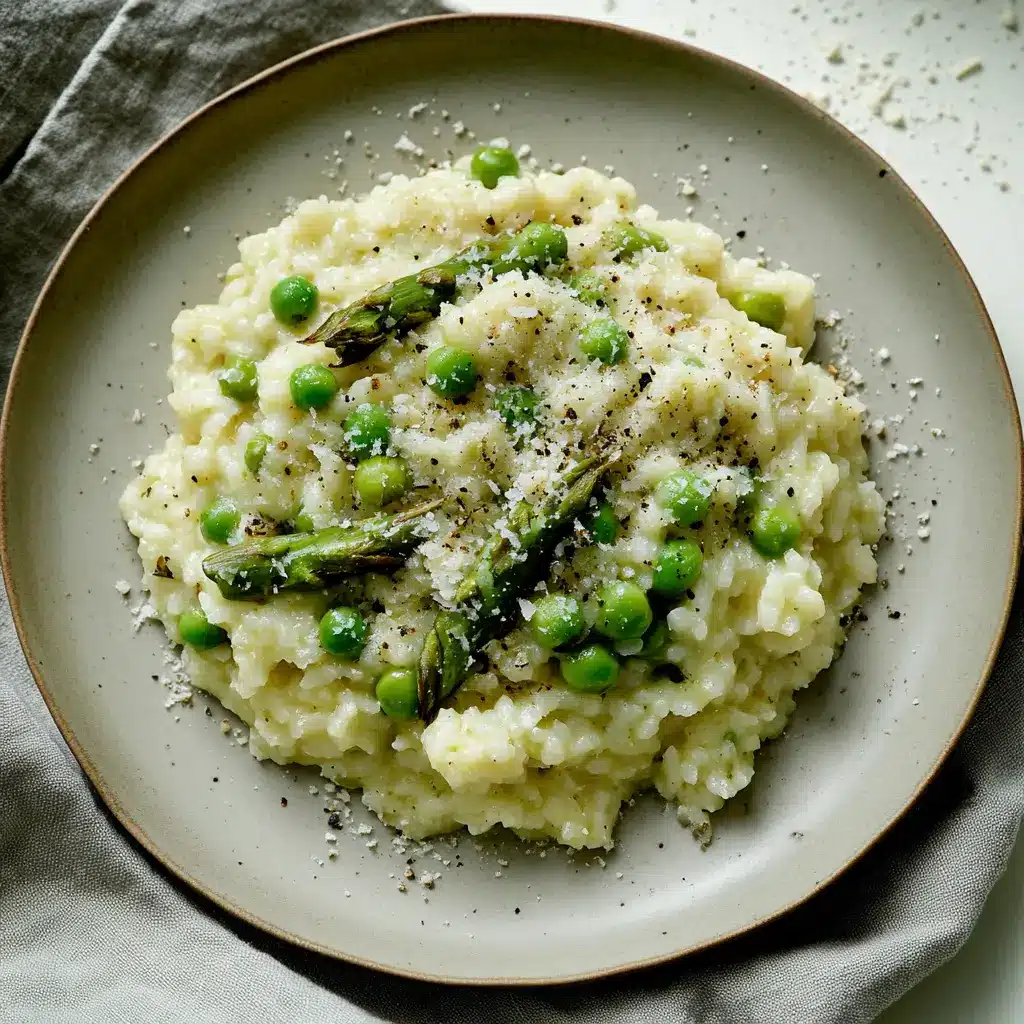
Why You’ll Love This Spring Risotto
This is one of those reliable weeknight wins that gets you back into a rhythm it looks like you spent an hour, but the actual hands-on work is just stirring and watching the rice soften into something creamy and beautiful. The asparagus stays bright, the peas add little bursts of sweetness, and the Parmigiano-Reggiano pulls everything together without needing a dozen ingredients.
- One pot, minimal cleanup: Everything happens in the same Dutch oven, so you’re not juggling multiple pans at the end of a long day.
- Spring vegetables at their best: Asparagus and peas feel fresh and light, but the creamy Arborio rice keeps it comforting.
- Impressive but forgiving: Risotto sounds fancy, but it’s really just rice, broth, and patience no tricky techniques or timing stress.
Key Ingredients That Make It Work
You don’t need a lot here, but each piece plays a role. The Arborio rice is the star it releases starch as it cooks, which is what creates that creamy texture without adding cream. The asparagus gets a head start so it stays tender-crisp instead of mushy, and the frozen peas defrost right in the pan, making this easier than it sounds.
- Arborio rice: Short-grain and starchy; it’s what gives risotto that signature creaminess.
- Low-sodium chicken broth: Keeps the salt level in your control and adds depth without overpowering the vegetables.
- Unsalted butter: Used in stages to build flavor and finish the dish with richness.
- Dry white wine: Adds brightness and a little acidity that balances the cheese.
- Parmigiano-Reggiano: The real stuff melts smoothly and adds a nutty, savory finish.
How to Make Risotto with Asparagus and Peas
The rhythm here is simple: keep the broth warm, add it slowly, and stir just enough to keep the rice from sticking. You’re not standing over the pot the entire time just checking in every couple of minutes while the rice absorbs the liquid and turns glossy.
| Step | What You’re Doing | Time |
|---|---|---|
| 1 | Bring broth to a simmer in a separate pot | 5 minutes |
| 2 | Cook asparagus and peas in butter until tender-crisp, then set aside | 3–5 minutes |
| 3 | Soften onion and garlic in butter, then toast the rice until glossy | 4–5 minutes |
| 4 | Add wine, let it absorb completely | 1 minute |
| 5 | Add broth 1 cup at a time, stirring frequently, until rice is creamy and al dente | 25 minutes |
| 6 | Stir in vegetables, cheese, and final tablespoon of butter | 1 minute |
Pro Tip: Don’t walk away while the rice is cooking it doesn’t need constant stirring, but it does need your attention every few minutes to prevent sticking and to know when to add the next ladle of broth.
Simple Swaps and Tweaks
This recipe is flexible enough to work with what you have on hand. If your asparagus is thick instead of thin, just give it an extra minute or two in the pan. You can also swap the frozen peas for fresh if it’s early summer and you’ve got them at the market.
| Ingredient | Swap Option |
|---|---|
| Chicken broth | Vegetable broth for a vegetarian version |
| Dry white wine | Extra broth (though you’ll lose a bit of brightness) |
| Frozen peas | Fresh peas, sugar snap peas (chopped), or even edamame |
| Parmigiano-Reggiano | Pecorino Romano for a sharper, saltier finish |
How to Serve and Store
Serve this straight from the pot into shallow bowls, with extra Parmigiano-Reggiano passed at the table and a few grinds of black pepper on top. It’s rich enough to be a main dish for four, or you can stretch it into a starter or side for eight if you’re serving it alongside roasted chicken or a simple salad.
Storage: Risotto is best fresh, but leftovers will keep in the fridge for up to 3 days. Reheat gently on the stovetop with a splash of broth or milk to loosen it back up it thickens as it sits. It won’t be quite as creamy as the first night, but it still tastes good stirred into a frittata or baked with a little extra cheese on top.
Dive into more delectable recipes and culinary ideas follow me on Facebook, Pinterest and Reddit!
FAQs ( Risotto with Asparagus and Peas )
Can I use frozen vegetables for this dish?
Yes, frozen asparagus and peas work well when fresh isn’t available. Add frozen peas during the last 2-3 minutes of cooking. For frozen asparagus, thaw and pat dry first, then add with about 5 minutes remaining to prevent overcooking.
What type of rice works best for creamy risotto?
Arborio rice is the most common choice and creates excellent creamy texture. Carnaroli and Vialone Nano are premium alternatives that hold their shape even better. Avoid long-grain rice like jasmine or basmati as they won’t release enough starch.
How do I know when my risotto is perfectly cooked?
The rice should be tender with a slight bite (al dente) and the mixture should flow like lava when stirred. It takes about 18-20 minutes of gradual broth addition. The consistency should be creamy but not soupy or stiff.
Can I make this recipe ahead of time?
This dish is best served immediately for optimal texture. However, you can par-cook it halfway, then finish cooking when ready to serve. Store the partially cooked rice in the fridge for up to 24 hours and resume with warm broth.
What wine pairs well with this spring vegetable dish?
A crisp white wine like Pinot Grigio or Sauvignon Blanc complements the fresh vegetables beautifully. For cooking, use the same wine you plan to drink. If you prefer red wine, choose a light Pinot Noir that won’t overpower the delicate flavors.
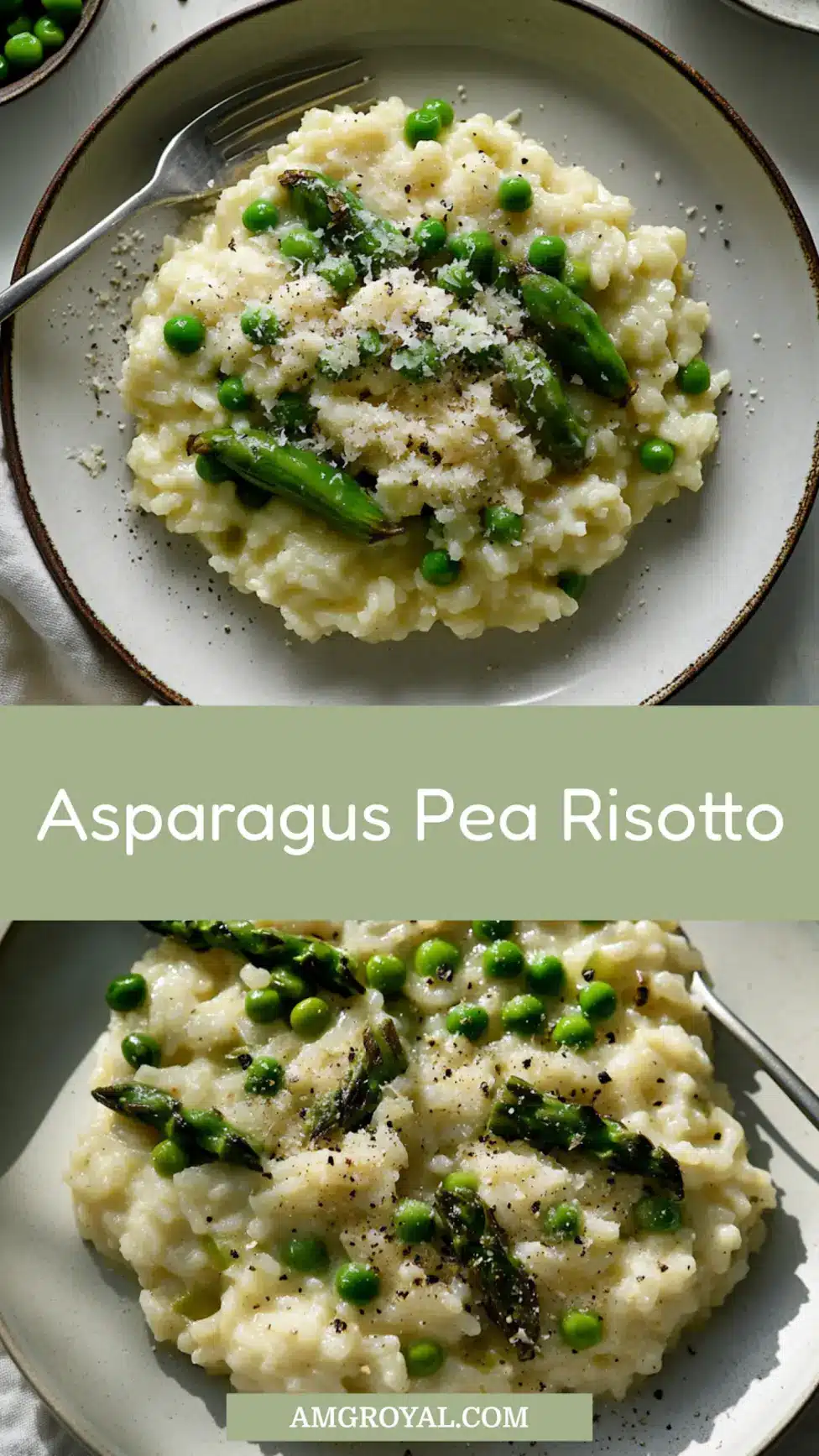
This Risotto with Asparagus and Peas takes about forty minutes from start to finish, but most of that is just gentle stirring while the rice softens into something creamy and beautiful. You’ll love how the vegetables stay bright against the rich, glossy rice it smells like spring and tastes like a hug in a bowl. The texture hits that perfect spot between comforting and light, and it’s one of those dinners that feels special even on a Tuesday.
If you want to change it up, stir in a handful of chopped fresh basil or mint right before serving that’s a trick I learned from my aunt’s kitchen, and it adds this lovely brightness that makes the whole dish sing. Swap the asparagus for zucchini or add a squeeze of lemon at the end if you like things a little more citrusy. Leftovers reheat beautifully with a splash of broth or milk to loosen them back up, and they also make a fantastic base for scrambled eggs the next morning.
I’d love to see how yours turns out tag me with a photo or leave a comment if you made this your own with different vegetables or herbs. Did your mom or grandmother have a risotto they stirred up when spring finally arrived? Share this recipe with someone who needs an easy dinner that still feels like home, or pin it for the next time you’re craving something warm and a little lighter. Here’s to dinners that help you get back into a rhythm.