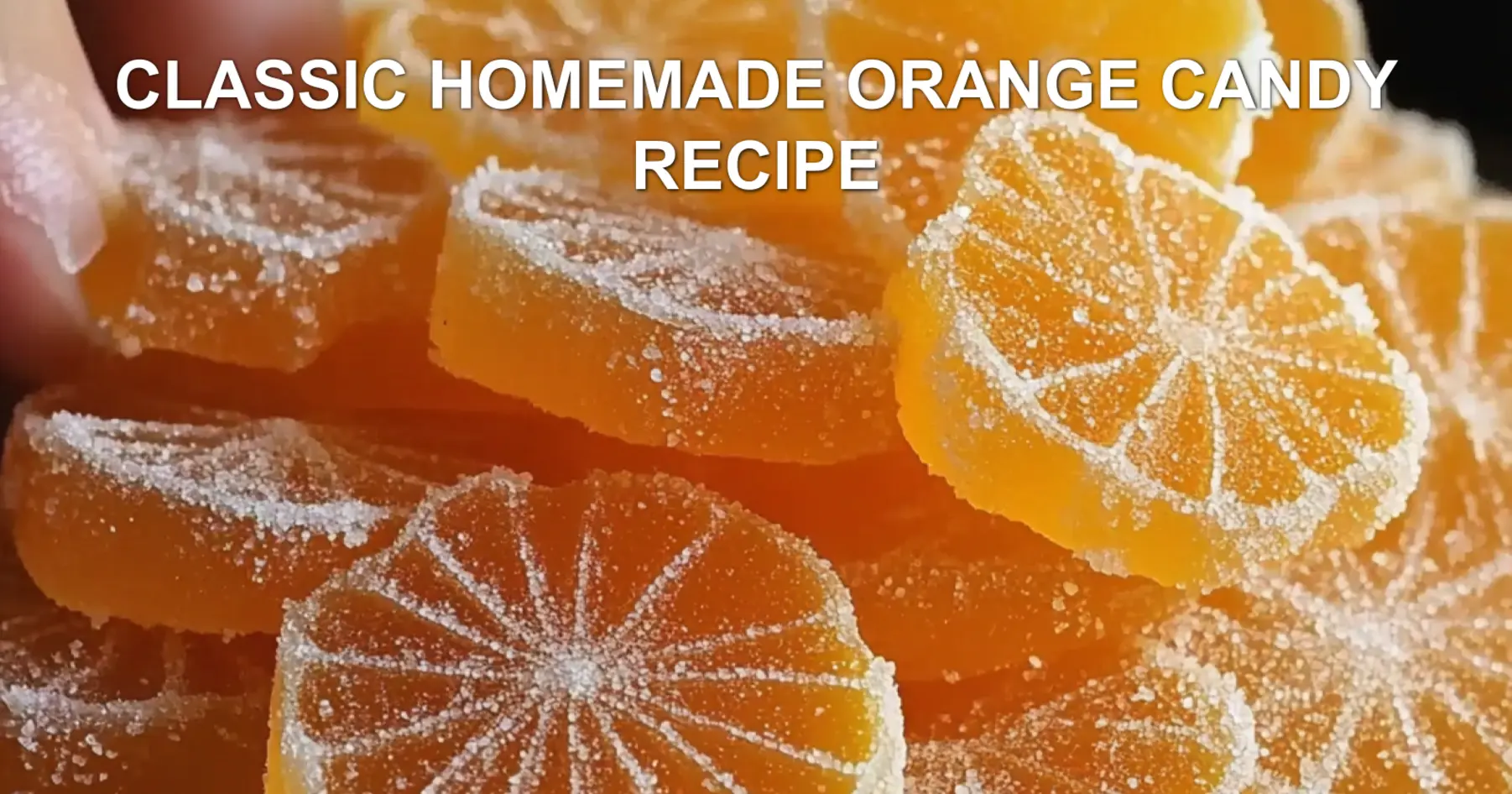
There’s something almost magical about watching sugar and fresh orange juice transform into glossy, jewel-toned candies on your stovetop. This classic homemade orange candy recipe brings back the kind of sweet nostalgia you’d find tucked in your grandmother’s recipe box bright, citrusy, and satisfyingly chewy with just the right amount of tang.
I started testing citrus candy variations back in 2019, tweaking gelatin ratios and syrup temperatures until I landed on this version. The trick is heating the mixture to exactly 240°F too low and you get sticky syrup, too high and it turns rock-hard. When my neighbor tasted the first batch, she said it reminded her of the orange slices from her childhood candy store, and honestly, that’s the best compliment I could ask for.
PrintClassic Homemade Orange Candy Recipe – Easy and Delicious

Enjoy a classic homemade orange candy recipe featuring old fashioned orange slice candy chewy delights made with sweet syrup. This easy stovetop orange jelly candies gelatin creates soft chewy orange fruit candy natural juice perfect for nostalgic treats and grandma’s orange drop candy sugar syrup lovers.
- Prep Time: 10 minutes
- Cook Time: 1 hour
- Total Time: 1 day 1 hour 10 minutes
- Yield: 18–20 slices 1x
- Category: Candy
- Method: Stovetop
- Cuisine: European
- Diet: Vegan
Ingredients
- 3 small oranges or tangelos about 18–20 slices
- 3 cups granulated sugar
- 3 cups water
Instructions
- Cut the oranges into ¼ inch thick rounds using a sharp knife or mandoline.
- Combine sugar and water in a saucepan and heat until the sugar fully dissolves and the mixture starts boiling.
- Lower the heat to maintain a gentle simmer and place the orange slices evenly in the syrup. Cook for 45 to 60 minutes stirring occasionally until the peel becomes translucent.
- Remove the slices carefully with tongs and place them on a wire rack to dry uncovered at room temperature for one to two days until firm but tacky.
- Optionally, toss the dried slices in sugar for a frosted look or dip in melted chocolate and sprinkle with flaky salt.
Notes
- Small oranges or mandarins work best for neat slices
- Do not reduce sugar
- it is essential for preservation
- Save leftover orange syrup for cocktails sparkling water or cakes
- Store slices in an airtight container with parchment paper between layers
- Not freezer-friendly
- keep at room temperature for up to 1 month
Nutrition
- Serving Size: 1 slice
- Calories: 70
- Sugar: 17 g
- Sodium: 0 mg
- Fat: 0 g
- Saturated Fat: 0 g
- Unsaturated Fat: 0 g
- Trans Fat: 0 g
- Carbohydrates: 18 g
- Fiber: 1 g
- Protein: 0 g
- Cholesterol: 0 mg
Why You’ll Love This Classic Homemade Orange Candy Recipe
These candied orange slices are the kind of treat that feels both elegant and deeply nostalgiclike something you’d find wrapped in wax paper at a vintage candy shop. What makes them special is their simplicity: just oranges, sugar, and water transform into glossy, translucent gems that taste like sunshine preserved in sugar.
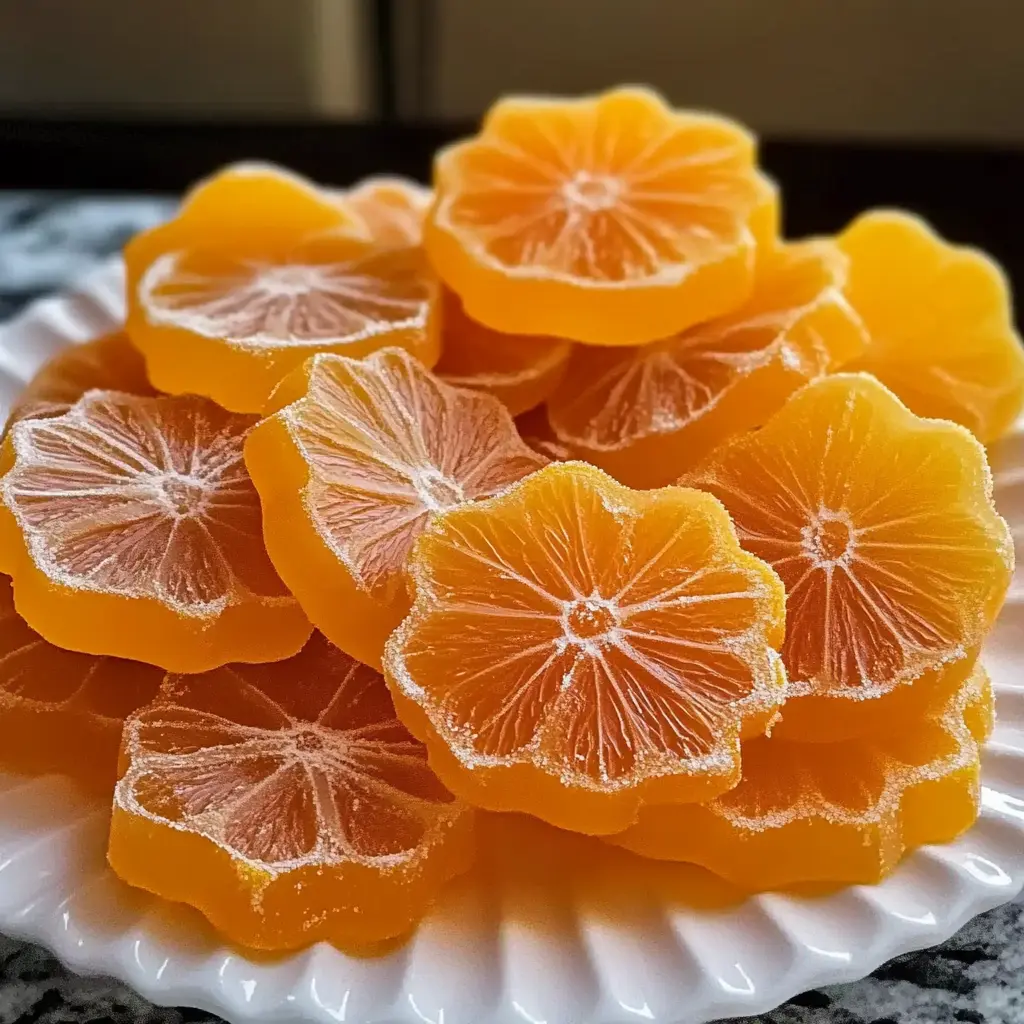
Here’s what makes them irresistible:
- Minimal ingredients: No fancy equipment or hard-to-find itemsjust three pantry staples and fresh citrus.
- Beautiful presentation: They look stunning on dessert plates, holiday platters, or packaged in a gift box tied with ribbon.
- Endlessly adaptable: Roll them in sugar for sparkle, dip in chocolate for decadence, or leave them plain for pure citrus flavor.
- Long shelf life: Store at room temperature for up to a month, making them perfect for holiday prep or edible gifts.
Key Ingredients & What They Do
The magic of this recipe lies in how three simple ingredients work together to create something truly special. Oranges provide the bright citrus basesmall ones or tangelos work best because they slice into neat, uniform rounds. The peel becomes translucent and candy-like while the flesh stays tender and chewy.
Granulated sugar is essential here, both in the syrup and optionally for rolling. It preserves the fruit, creates that glossy coating, and balances the natural tartness. Don’t reduce the amountit’s what keeps the slices shelf-stable and gives them that satisfying texture.
Water combines with sugar to create the simmering syrup that gently candies the fruit over time. The slow simmer allows the syrup to penetrate every layer, turning ordinary citrus into something extraordinary.
Step-by-Step: How It Comes Together
The process is surprisingly straightforward, though it does require patience during the simmering and drying stages. Start by slicing your oranges into consistent ¼-inch roundsa mandoline makes this easy, but a sharp knife works perfectly fine. Uniform thickness ensures even cooking.
| Step | What to Do | Time |
|---|---|---|
| 1. Prep | Slice oranges into ¼-inch rounds | 10 min |
| 2. Make Syrup | Combine sugar and water, heat until dissolved and boiling | 5 min |
| 3. Simmer | Add slices, reduce heat, simmer gently until translucent, turning occasionally | 45–60 min |
| 4. Dry | Arrange on wire rack, dry uncovered at room temperature | 24–48 hours |
| 5. Finish | Optional: roll in sugar or dip in chocolate | 5 min |
Pro Tip: The slices are ready when the peel looks almost see-through and the syrup has thickened slightly. Don’t rush the drying timepatience is what gives you that perfect chewy-but-not-sticky texture.
Troubleshooting & Kitchen Hacks
If your slices turn out too sticky after drying, they likely didn’t dry long enough. Give them another 12–24 hours on the rack in a spot with good air circulation. You can also place them near a sunny window or in a room with low humidity to speed things up.
Slices that are rock-hard instead of chewy usually mean the syrup got too hot or simmered too long. Keep your heat low and gentlea rolling boil will cook them too fast and make the texture tough. Look for just a few lazy bubbles breaking the surface.
Note: If you’re short on counter space for drying, you can use multiple cooling racks stacked with parchment between layers. Just make sure air can still circulate around each slice.
Creative Twists & Finishing Options
The basic candied slices are wonderful on their own, but there’s room to play. Rolling them in granulated sugar while still slightly tacky gives them a frosted, sparkly finish that catches the light beautifully. For a more indulgent version, dip half of each slice in melted chocolate and sprinkle with flaky saltthe combination of sweet, bitter, and salty is absolutely addictive.
You can also use the leftover orange syrup in creative ways: stir it into sparkling water for homemade citrus soda, drizzle over pound cake, or shake into cocktails. It keeps in the fridge for weeks and tastes like concentrated sunshine.
How to Serve & Store
These candied slices shine as a standalone treat, but they’re equally stunning as dessert garnishes, stirred into yogurt, or arranged on a cheese board. They add an elegant touch to holiday cookie platters and make thoughtful homemade gifts when layered in glass jars with parchment between each slice.
| Storage Method | How to Do It | Shelf Life |
|---|---|---|
| Room Temperature | Store in airtight container with parchment between layers | Up to 1 month |
| Gift Packaging | Layer in glass jars or tins with parchment, tie with ribbon | 2–3 weeks |
| Chocolate-Dipped | Store in single layer in cool, dry place | 1–2 weeks |
Important: These are not freezer-friendlyfreezing changes the texture and makes them gummy. Stick to room temperature storage in a dry spot away from humidity.
Dive into more delectable recipes and culinary ideas follow me on Facebook, Pinterest and Reddit!
FAQs ( Classic Homemade Orange Candy Recipe )
What temperature should my candy thermometer reach for perfect results?
Heat your sugar syrup to exactly 300°F (hard crack stage) for the best texture. This temperature ensures your candies will set properly and have that satisfying snap. Always use a calibrated candy thermometer and avoid stirring once the mixture starts boiling to prevent crystallization.
How long do these orange candies stay fresh when stored properly?
Store your finished candies in an airtight container at room temperature for up to 3 weeks. Keep them in a cool, dry place away from humidity to maintain their crisp texture. Layer between parchment paper to prevent sticking together.
Can I use fresh orange juice instead of extract for flavoring?
Fresh orange juice contains too much water and will prevent proper setting. Stick with orange extract or orange oil for the best results. If you want natural flavor, add finely grated orange zest along with a small amount of extract for that authentic citrus taste.
Why did my candy turn cloudy instead of clear?
Cloudy candy usually results from stirring the mixture after it begins boiling or from sugar crystals forming on the pan sides. Next time, brush down the sides with a wet pastry brush and avoid stirring once the mixture reaches a rolling boil. This old fashioned orange slice candy chewy technique ensures crystal-clear results.
What should I do if my candy sticks to the molds?
Lightly spray your molds with cooking spray or dust with powdered sugar before pouring. If candies still stick, place the molds in the freezer for 10 minutes – they’ll pop out easily. Silicone molds work best for easy release compared to plastic ones.

Final Thoughts on Your Candied Orange Slices
This classic homemade orange candy recipe delivers glossy, translucent slices with a gorgeous chew and bright citrus punchall from your stovetop in under two hours of active work. The scent alone will fill your kitchen with pure sunshine and nostalgia.
I love experimenting with Meyer lemons or blood oranges for color variation, and a pinch of cardamom in the syrup adds an unexpected warmth. If you’re feeling fancy, tuck a candied slice into a homemade gift box with chocolate trufflesit’s a showstopper every time. Store extras in a cool spot; they keep beautifully and actually improve after a few days of drying.
Did you make these with tangerines from your backyard tree, or maybe add a little ginger to the syrup? I’d love to hear how you made this recipe your ownshare a photo or drop a comment below. Save this one for citrus season, or bookmark it now so it’s ready when those winter oranges hit their peak sweetness.