



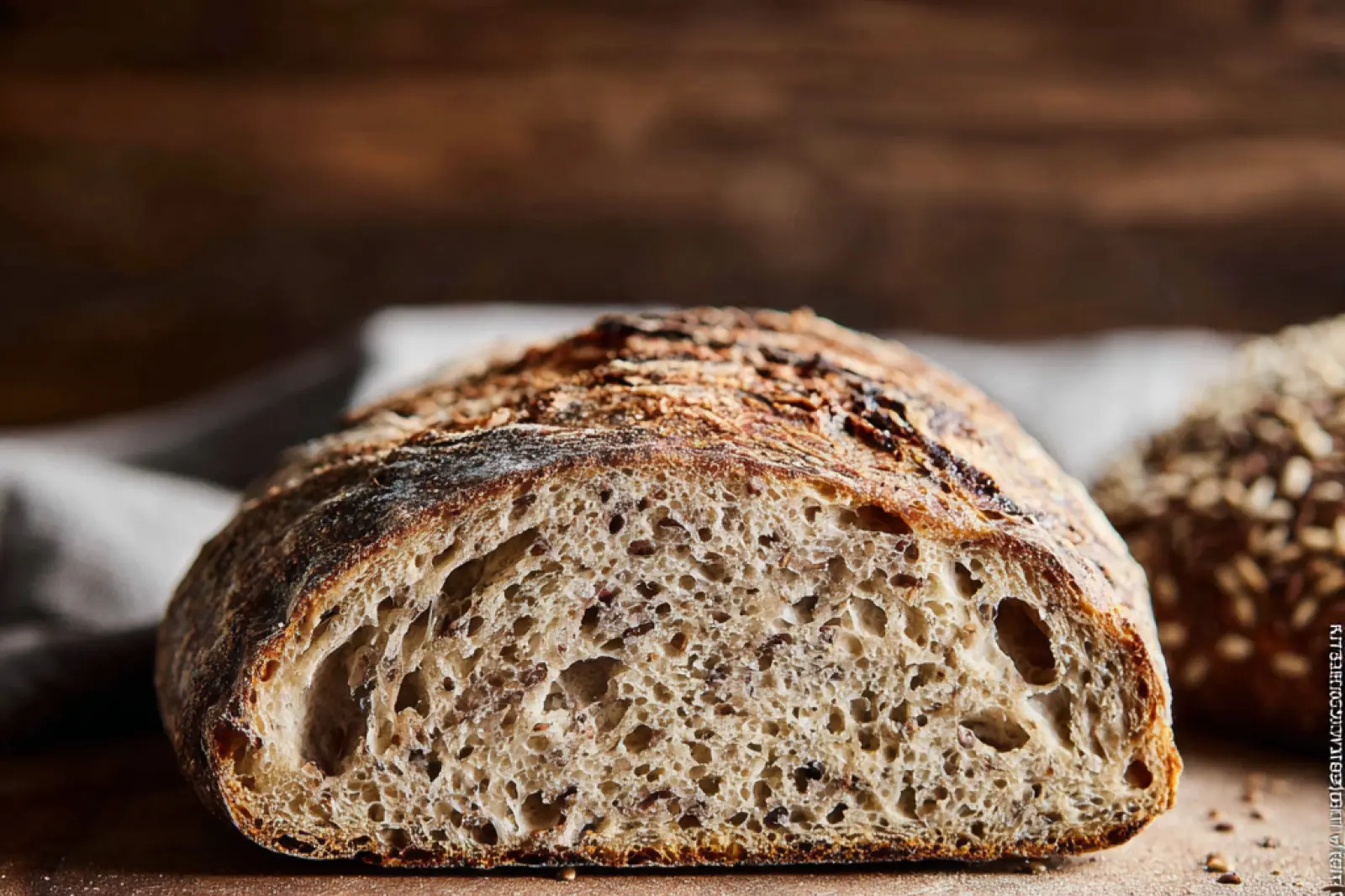
That first slice still warm, with a crackling crust and a chewy, seed-flecked crumb is honestly one of the best things you can pull out of a home oven. Seeded Multigrain Sourdough Bread hits that perfect spot between rustic and real, the kind of whole grain loaf that actually delivers on flavor.
Spring always makes me want to reset lighter meals, simpler routines, less decision fatigue at 6pm. I started testing this loaf a few years back after a stretch of dense, disappointing bakes, and the fix was in the hydration and the seed soak two small details that change everything. After testing dozens of variations, getting that open crumb with a crispy shell without overcomplicating the process is what I’m most proud of here.
PrintSeeded Multigrain Sourdough Bread Warm Satisfying Loaf You Need to Make Now
Enjoy a Seeded Multigrain Sourdough Bread perfect for an easy lunch or quick lunch option. This whole grain sourdough loaf features a crispy crust and hearty texture, making it an ideal choice for lunch ideas and a satisfying seeded sourdough loaf.
- Prep Time: 15 minutes
- Cook Time: 50 minutes
- Total Time: 15 hours 5 minutes
- Yield: 12 slices 1x
- Category: Bread
- Method: Baked
- Cuisine: American, French
- Diet: Vegan, Vegetarian
Ingredients
- 1/4 C (40g) 10 Grain Cereal *(see note)
- 3 Tbs (25g) Rolled Oats not quick
- 2 Tbs (25g) Quinoa red or tricolor rinsed
- 2 Tbs (25g) Flax Seed
- 2 Tbs (25g) Hulled Sunflower Seeds unsalted
- 3/4 C (155g) Hot Water about 150F (65C) or soak the grains and seeds overnight in room temperature water
- 1/4 C (50g) Sourdough Starter previously fed bubbly and active
- 1 1/3 C (300g) Warm Water about 80f (26c)
- 2 1/2 Tbs (50g) Maple Syrup
- 3 C (400g) Bread Flour
- 1/2 C + 1 Tbs (100g) Whole Wheat Bread Flour or whole wheat flour
- 2 tsp (16g) Fine Sea Salt
Instructions
- Combine the 10 grain cereal, rolled oats, quinoa, flax seeds, sunflower seeds, and hot water in a medium bowl and set aside to soak.
- In the evening, whisk together the sourdough starter, warm water, and maple syrup in a large bowl. Add the bread flour, whole wheat bread flour, and sea salt. Stir initially with a fork until the mixture becomes shaggy and then knead by hand for 3 to 4 minutes until all the flour is incorporated and the dough starts to feel more hydrated.
- Cover the bowl with a damp towel and let the dough rest for 30 minutes.
- Add the soaked grains and seeds soaker on top of the dough, kneading and folding it for 1 to 2 minutes until evenly distributed. Adjust flour or water if needed to achieve the right dough consistency.
- Rest the dough covered for another 30 minutes.
- With the dough still in the bowl, fold it by pulling portions upward and folding over, pressing gently. Repeat around the dough at least once or up to three times total, allowing 30 to 45 minutes between folds.
- After the final fold, cover the bowl with two damp towels and let the dough ferment overnight at room temperature for 8 to 14 hours until it has doubled in size and is jiggly when shaken.
- In the morning, lightly flour the work surface and transfer the dough onto it using damp fingertips. If making two loaves, moisten the bench scraper and divide the dough in half.
- Shape each piece by gently stretching and folding the dough towards the center, pressing it down lightly. Flip the dough over with a bench scraper and let rest for 10 minutes.
- Prepare a floured banneton or bowl lined with a towel, lightly mist the work surface, and tighten the dough by cupping it and pulling it in a circular motion using the bench scraper to create a taut skin. Dust with flour, smooth the surface, then transfer dough into the prepared bowl or banneton bottom side up. Sprinkle flour on the bottom of the dough.
- Cover with a damp towel and let proof for 30 to 45 minutes until slightly risen but not doubled.
- Preheat the oven to 500F (260C), place a sheet pan on the lowest rack, and arrange racks so the baking vessel is on the middle rack.
- Cut a sheet of parchment to fit the baking vessel. Carefully invert the proofed dough onto the parchment, score the top about 1/2 inch deep and 4 inch long or as desired.
- Transfer the dough with parchment into the baking vessel, cover it, reduce oven temperature to 450F (232C), and bake covered for 20 minutes.
- Remove the lid and bake uncovered for 30 to 35 minutes for one large loaf or 15 to 20 minutes for two smaller loaves until internal temperature reaches 190F to 205F.
- Remove bread from oven and cool on a wire rack for 1 hour before slicing.
Notes
- For crisp tops, broil 2–3 minutes at the end
Nutrition
- Calories: 190kcal
Why You’ll Love This Loaf
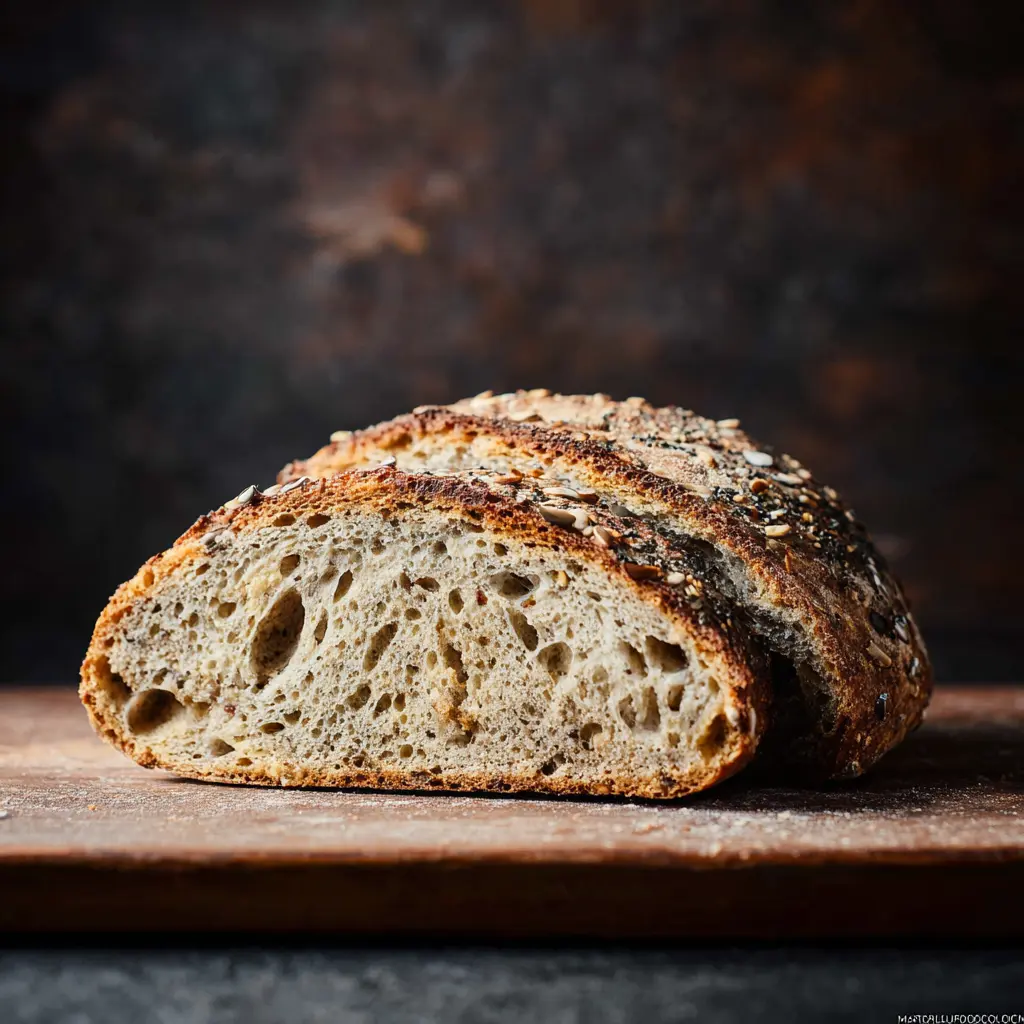
There is something genuinely satisfying about pulling a crackling, seed-covered boule from the oven on a slow Sunday morning and then coasting through the week on the best sandwiches you have had in months. This is the kind of bake that makes the whole process feel worth it.
- Deep, earthy flavor from a real blend of grains and seeds not just a dusting on top
- A crispy crust with a chewy, open crumb that holds up to everything from avocado to almond butter
- Low active effort most of the work happens overnight while you sleep
- On tired weeknights when you just want something that feels nourishing and real, a thick slice toasted straight from the freezer is exactly that
What Goes Into the Dough
The ingredient list is straightforward, but every element earns its place. The soaker a mix of 10 grain cereal, rolled oats, quinoa, flax seeds, and hulled sunflower seeds hydrated in hot water is what separates this from any ordinary sourdough. It adds moisture, texture, and that nutty depth you cannot fake.
- Bread flour and whole wheat bread flour form the base the blend keeps structure without feeling heavy
- Maple syrup adds just enough warmth to balance the tang of the starter
- Fine sea salt and an active, bubbly sourdough starter are the two things you cannot skip
Note: If 10 grain cereal is hard to find, Bob’s Red Mill 7 or 6 grain cereal works beautifully or a mix of polenta, millet, quinoa, and amaranth does the job just as well.
How to Make Seeded Multigrain Sourdough Bread
The process spans roughly two days, but active hands-on time is minimal. Here is how it flows:
- Mix the soaker ingredients with hot water and set aside to hydrate for at least 30 minutes.
- Whisk starter, warm water, and maple syrup together, then add both flours and salt mix until no dry bits remain.
- Rest 30 minutes, then fold in the soaker by kneading and folding the dough for 1–2 minutes.
- Perform 2–3 stretch-and-fold rounds, spaced 30–45 minutes apart, to build structure.
- Cover and bulk ferment overnight at room temperature 8 to 14 hours depending on your kitchen temperature.
- Shape into one large boule or two smaller ones, proof 30–45 minutes, then score and bake in a lidded Dutch oven at 450°F.
Pro Tip: After years of testing hydration adjustments, Virginie recommends assessing the dough after the soaker is fully incorporated that is the right moment to add a splash more water or a handful more flour if needed.
Can You Make This Bread Ahead of Time?
Yes and honestly, this loaf is practically built for it. The bulk fermentation step happens overnight, so the dough is already doing its thing while you are off the clock. Bake on Sunday and you have fresh bread ready for the whole week.
- Stores at room temperature for 3–4 days keep it cut side down on the counter
- Freezes beautifully for up to two weeks, whole or pre-sliced
- Goes straight from freezer to toaster for genuinely excellent toast
Swaps and Adjustments Worth Knowing
The recipe is flexible once you understand what each ingredient is doing. A few easy swaps if you are working with what you have:
- Whole wheat bread flour can be replaced with regular whole wheat flour results are similar, just slightly less stretchy
- 10 grain cereal can be swapped for polenta, millet, quinoa, amaranth, or a combination
- Honey works in place of maple syrup if that is what you have on hand
- One large 7-quart Dutch oven or any lidded oven-safe vessel works for baking
Hydration is the one variable that will shift batch to batch depending on your flour brand and kitchen humidity adjust a teaspoon at a time after mixing in the soaker, and do not stress it.
Dive into more delectable recipes and culinary ideas follow me on Pinterest and Reddit!
FAQs ( Seeded Multigrain Sourdough Bread )
How long does Seeded Multigrain Sourdough Bread take to make?
Total time is about 15 hours, including up to 14 hours of fermentation and proofing. Plan to mix the dough Saturday night and bake Sunday morning.
What grains and seeds are used in this recipe?
The soaker includes 10 grain cereal, rolled oats, quinoa, flax seed, and hulled sunflower seeds. If 10 grain cereal is unavailable, polenta, millet, quinoa, or amaranth work well as substitutes.
How do I know when this bread is done baking?
Check the internal temperature – the loaf is done when it reads between 190F and 205F. Transfer to a wire rack and cool for 1 hour before slicing.
Can I freeze this bread?
Yes, this recipe freezes beautifully – store whole or sliced in a freezer bag for up to two weeks. Thaw at room temperature, or go straight from freezer to toaster.
How much bread does this recipe make?
This recipe makes one 2 lb boule or two 1 lb boules, yielding approximately 12 slices depending on thickness.
Your New Favorite Loaf Is Ready
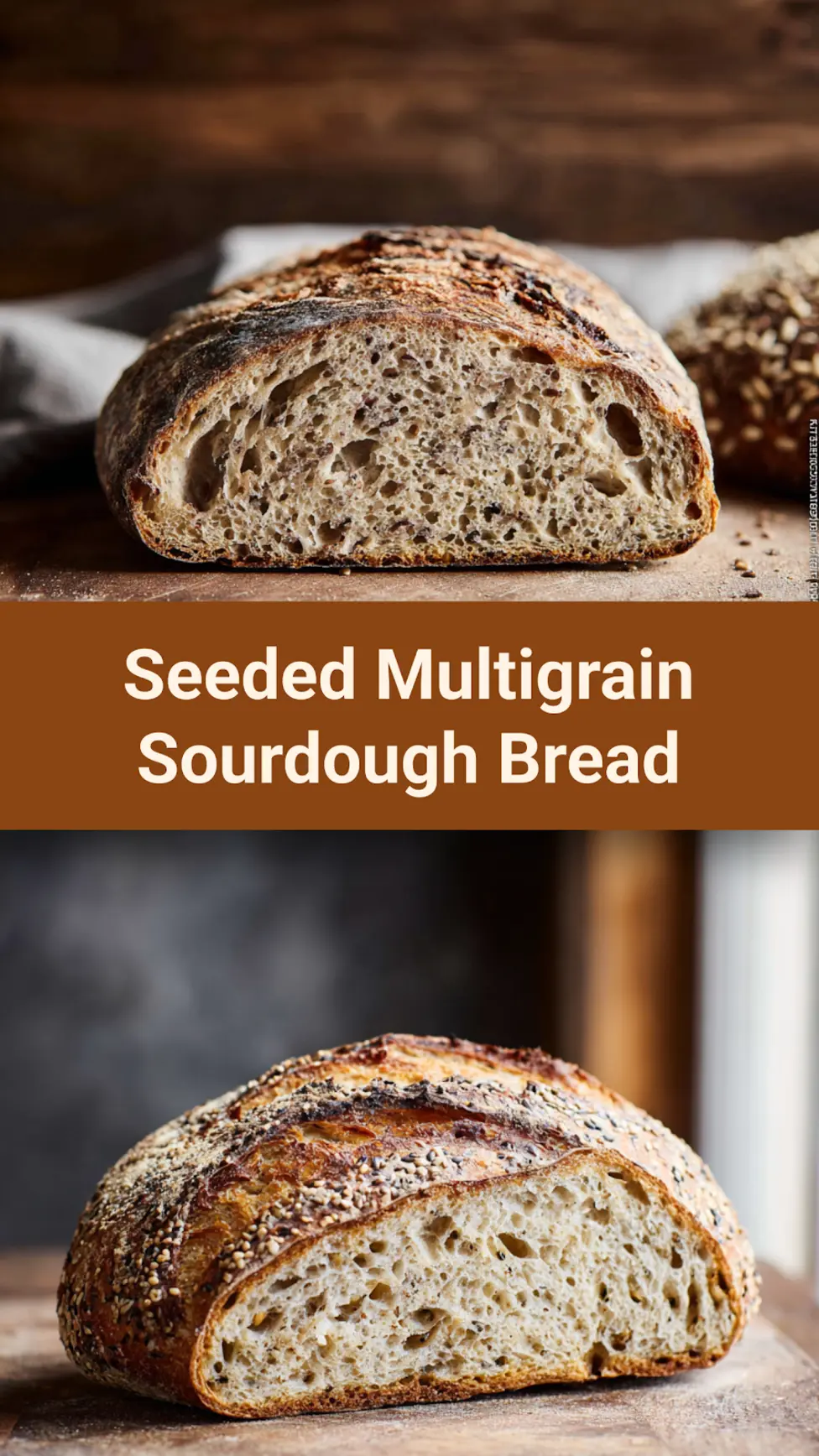
This Seeded Multigrain Sourdough Bread is the kind of bake that fills your whole kitchen with the smell of a serious bakery and the payoff is absolutely worth every fold and overnight rest. That crackling crust, the chewy seed-flecked crumb, the way a warm slice holds up to anything you pile on it you will be genuinely proud of this one.
A couple of things worth keeping in mind: the soaker is truly the heart of this recipe do not skip it or rush it, because that hot-water soak is what gives you the nutty depth and moisture that sets this loaf apart. And if you are working with what is already in your pantry, honey swaps in beautifully for the maple syrup without missing a beat. Bake on Sunday, slice through Monday, freeze the rest it goes straight from freezer to toaster and comes out perfectly every time.
I would love to know how yours turned out did you try it with avocado, or go straight for the almond butter? Drop a comment below, share a photo, or pass this recipe along to a friend who has been thinking about getting into sourdough. Some weekends just deserve a bake this good.



https://shorturl.fm/MtDaj
https://shorturl.fm/ZTxXa