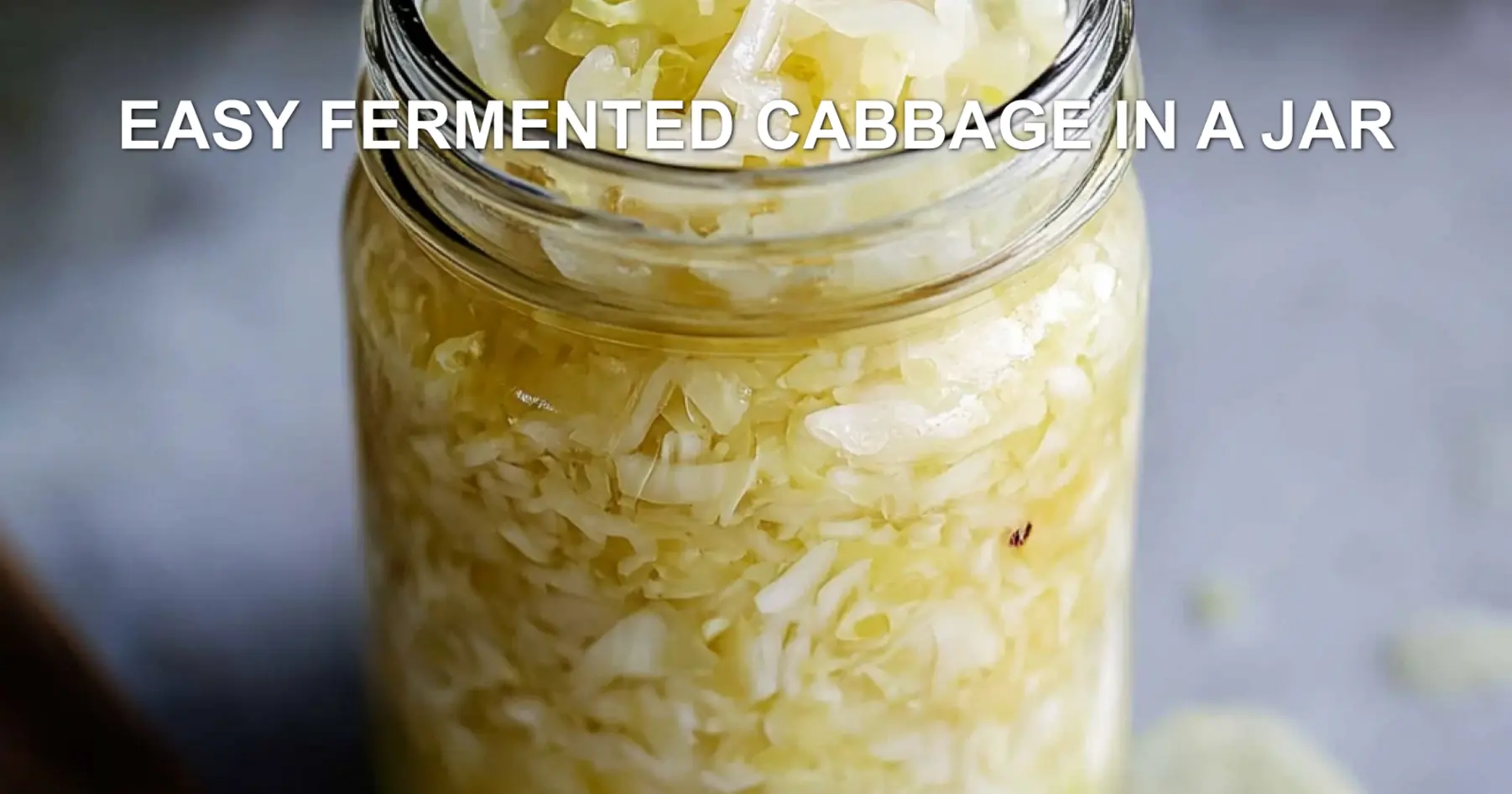
The sharp crack of fresh cabbage under the knife. The way salt pulls out every drop of moisture. That tangy, alive smell that fills your kitchen after just a few days. Easy fermented cabbage in a jar is having a moment, and honestly, it’s about time.
This recipe uses just three ingredients – cabbage, salt, and time. No fancy equipment, no vinegar, just the ancient magic of fermentation working in a simple mason jar. It’s like having your own little probiotic factory on the counter. Full details in the blog!
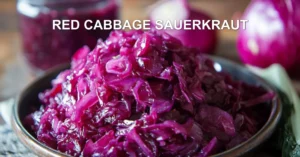
I’ve been experimenting with fermentation for years, testing different salt ratios and timing until I found the sweet spot. My latest batch of red cabbage turned the most gorgeous pink color – nature’s own food coloring. I tested it at five days and it was perfect. You’ll love how simple this really is.
PrintEasy Fermented Cabbage In A Jar: Delicious Probiotic Recipe
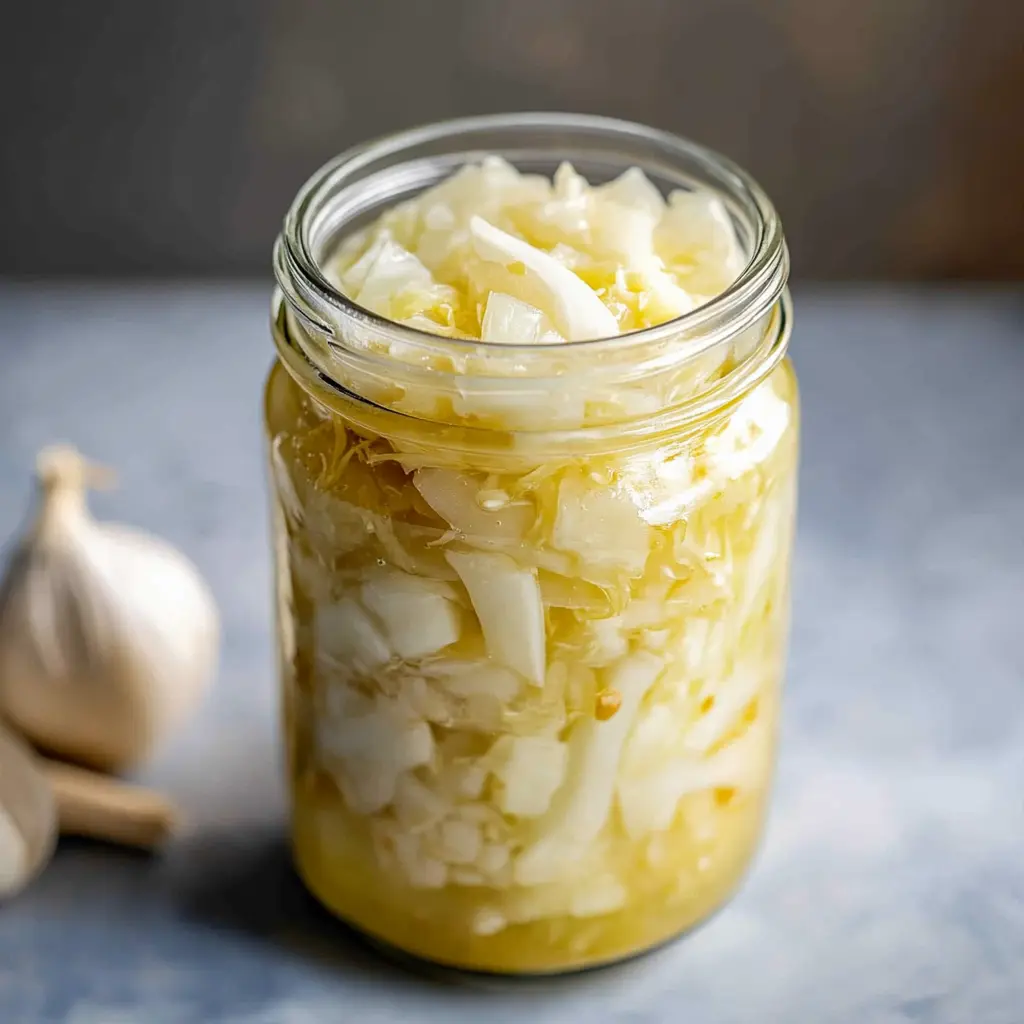
Enjoy this Easy Fermented Cabbage In A Jar for a healthy probiotic boost. This Homemade Sauerkraut Jar 5 Days recipe supports gut health and brings out bold flavors without vinegar. A simple way to make Fermented Cabbage Gut Health Probiotic at home.
- Prep Time: 10 minutes
- Total Time: 10 days
- Yield: Serves 8
- Category: Sides
- Method: Stovetop
- Cuisine: American, bulgarian, European, German
- Diet: Standard
Ingredients
- 1 head of green cabbage 3-4 lb
- 1 1/2 tbsp Kosher salt or 1 tablespoon fine sea salt
- More salt + filtered water
- To extra liquid if needed for every 1 cup filtered water add 1 teaspoon of sea salt stir to dissolve
Instructions
- Clean all jars knives and cutting boards thoroughly and dry them to prepare for fermentation.
- Remove outer leaves from cabbage cut it into quarters and slice thinly.
- Place sliced cabbage in a large bowl sprinkle salt evenly over it and massage with your hands to release liquid.
- Transfer cabbage and any released liquid into jars pressing firmly so it is packed tightly.
- Use clean stones or weights to keep cabbage submerged in liquid inside the jar.
- Cover jars loosely or secure with a cloth and rubber band to allow gases to escape.
- Let cabbage ferment at room temperature between 60-75 F out of direct sunlight for 3 to 14 days pressing down occasionally.
- If after 24 hours liquid does not cover cabbage make additional brine by dissolving 1 teaspoon salt in 1 cup filtered water and add to jars.
- Begin tasting from day 3 and once flavor is to your liking remove weight and seal jars.
- Store fermented cabbage in the refrigerator for up to 2 months.
Nutrition
- Calories: 28kcal
- Sugar: 4g
- Sodium: 1329mg
- Fat: 1g
- Saturated Fat: 1g
- Unsaturated Fat: 1g + 1g
- Carbohydrates: 7g
- Fiber: 3g
- Protein: 1g
Why You’ll Fall in Love with This Recipe
There’s something deeply satisfying about transforming simple cabbage into tangy, probiotic-rich easy fermented cabbage in a jar. This isn’t just about making foodit’s about reconnecting with ancient preservation methods that our ancestors relied on.
- Just three ingredients: green cabbage, kosher salt, and filtered water create magic in your kitchen
- No vinegar needed: The natural fermentation process develops that signature sour tang all on its own
- Gut health benefits: Each forkful delivers beneficial probiotics that support digestive wellness
- Perfect for keto: Low-carb, flavorful, and incredibly versatile for any eating style
Breaking Down Your Simple Ingredients
The beauty of this fermented cabbage gut health probiotic recipe lies in its simplicity. Each ingredient plays a crucial role in the fermentation magic.
Green cabbage (3-4 lb head): Choose firm, heavy heads with tight leaves. The natural sugars in fresh cabbage feed the beneficial bacteria during fermentation. Don’t worry about removing every outer leafjust the damaged ones.
Kosher salt: This draws moisture from the cabbage and creates the perfect environment for good bacteria to thrive. Fine sea salt works too, but avoid table salt with additives that can interfere with fermentation.
| Salt Type | Amount Needed | Best For |
|---|---|---|
| Kosher Salt | 1 1/2 tbsp | Even distribution, clean flavor |
| Fine Sea Salt | 1 tbsp | Quick dissolving, mineral content |
| Filtered Water + Salt | 1 tsp per cup water | Extra brine if needed |
How the Magic Happens Step by Step
The fermentation process might seem mysterious, but it’s beautifully straightforward. Clean equipment is your first stepany unwanted bacteria can spoil your batch before the good guys take over.
Massaging salt into the sliced cabbage is where the transformation begins. Your hands become the tools that break down cell walls, releasing the cabbage’s natural juices. This creates the brine that protects your fermenting vegetables.
- Days 1-2: Cabbage releases liquid and bubbling begins
- Days 3-5: Tangy flavors develop, perfect for homemade sauerkraut jar 5 days timing
- Days 6-14: Deeper, more complex sour notes emerge
Troubleshooting Your Fermentation Journey
Even experienced fermenters encounter hiccups. The most common concern is not having enough liquid to cover the cabbage after the first day.
White film on top? This kahm yeast is harmless but can affect taste. Skim it off and make sure your cabbage stays submerged. Not enough brine? Mix filtered water with salt (1 teaspoon per cup) and add until the cabbage is covered.
Pro Tip: Temperature matters more than you think. Keep your jars between 60-75°F for consistent results. Cooler temperatures slow fermentation, while warmer speeds it up.
Creative Ways to Customize Your Batch
While this recipe focuses on classic green cabbage, you can easily adapt it for variety. Red cabbage sauerkraut jar red creates stunning purple-pink colors and adds visual drama to any plate.
- Mix cabbage varieties: Combine green and red for colorful results
- Adjust fermentation time: Taste daily after day 3 to find your perfect tang level
- Size flexibility: Use multiple smaller jars or one large container based on your needs
Serving Ideas and Storage Solutions
Your finished simple sauerkraut recipe mason jar creation transforms ordinary meals into probiotic powerhouses. Pile it on sandwiches, stir into salads, or serve alongside roasted meats for traditional German-inspired comfort.
Once fermented to your liking, refrigeration stops the process and preserves that perfect tang. The cool temperature keeps your cabbage crisp and flavorful for up to two months.
| Storage Method | Duration | Best Use |
|---|---|---|
| Counter Fermentation | 3-14 days | Developing flavor |
| Refrigerated | Up to 2 months | Daily consumption |
| Room Temperature | Avoid after fermentation | Will over-ferment |
Expert Says
Fermenting cabbage is a simple and rewarding process that enhances its nutritional profile. As it ferments, beneficial probiotics develop, improving gut health. This EASY FERMENTED CABBAGE IN A JAR method not only preserves the cabbage but also boosts its vitamins and allows the flavors to deepen over time.
For more delicious recipes and cooking inspiration, follow me on Facebook, Pinterest and Reddit!
Easy Fermented Cabbage In A Jar
After experimenting with several batches of fermented cabbage, I finally captured that perfect crunch and tang. One time, I got distracted and left it too long, creating something that was more pickle than cabbage. But through every misstep, I learned the beauty of patience and flavor, making this recipe truly a labor of love.
FAQs ( Easy Fermented Cabbage In A Jar )
What is fermented cabbage?
Fermented cabbage is a preserved form of cabbage that undergoes a natural fermentation process. This method enhances its flavor and increases its probiotic content, making it beneficial for gut health. It’s often enjoyed as a tangy side dish or as part of various meals.
How long does it take to ferment cabbage?
Typically, fermenting cabbage takes about 5 to 14 days, depending on the temperature and your taste preference. In warmer conditions, fermentation happens faster. You can taste the cabbage after a few days to determine when it’s at the right tanginess for you.
Can I use red cabbage for this recipe?
Absolutely! Using red cabbage will give your dish a vibrant color and a slightly different flavor profile. The fermentation process remains the same, and red cabbage also offers great health benefits, making this version just as nutritious.
Do I need vinegar to ferment cabbage?
No, you do not need vinegar for fermentation. This recipe relies on the natural lactic acid bacteria present in the cabbage for the fermentation process. Adding vinegar is unnecessary and may inhibit the beneficial bacteria’s growth.
Is fermented cabbage suitable for a keto diet?
Yes, this dish is suitable for a keto diet! Fermented cabbage is low in carbs and packed with probiotics, making it a great addition to your meals. It can complement a variety of keto-friendly dishes, enhancing flavors without adding unnecessary carbs.

Your kitchen will fill with that unmistakable tangy aroma as this easy fermented cabbage in a jar transforms over just five days. You’ll love how the simple salt massage releases those natural juices, creating the perfect brine. The bubbling sounds and deepening flavors tell you the magic is workingancient fermentation wisdom right on your counter.
I’ve learned that red cabbage creates the most gorgeous pink hues, while a pinch of caraway seeds adds traditional German flair. If your cabbage seems dry, don’t worryjust add that simple salt water brine I mentioned. Store finished jars in the fridge for up to two months, though mine rarely lasts that long once my family discovers it.
I’d love to see your colorful jars bubbling away! Share a photo and tell medid your grandmother make her own sauerkraut too? There’s something so satisfying about continuing these time-honored traditions. Save this recipe for your next batch, and maybe start one this weekend. Your gut and your taste buds will thank you.